
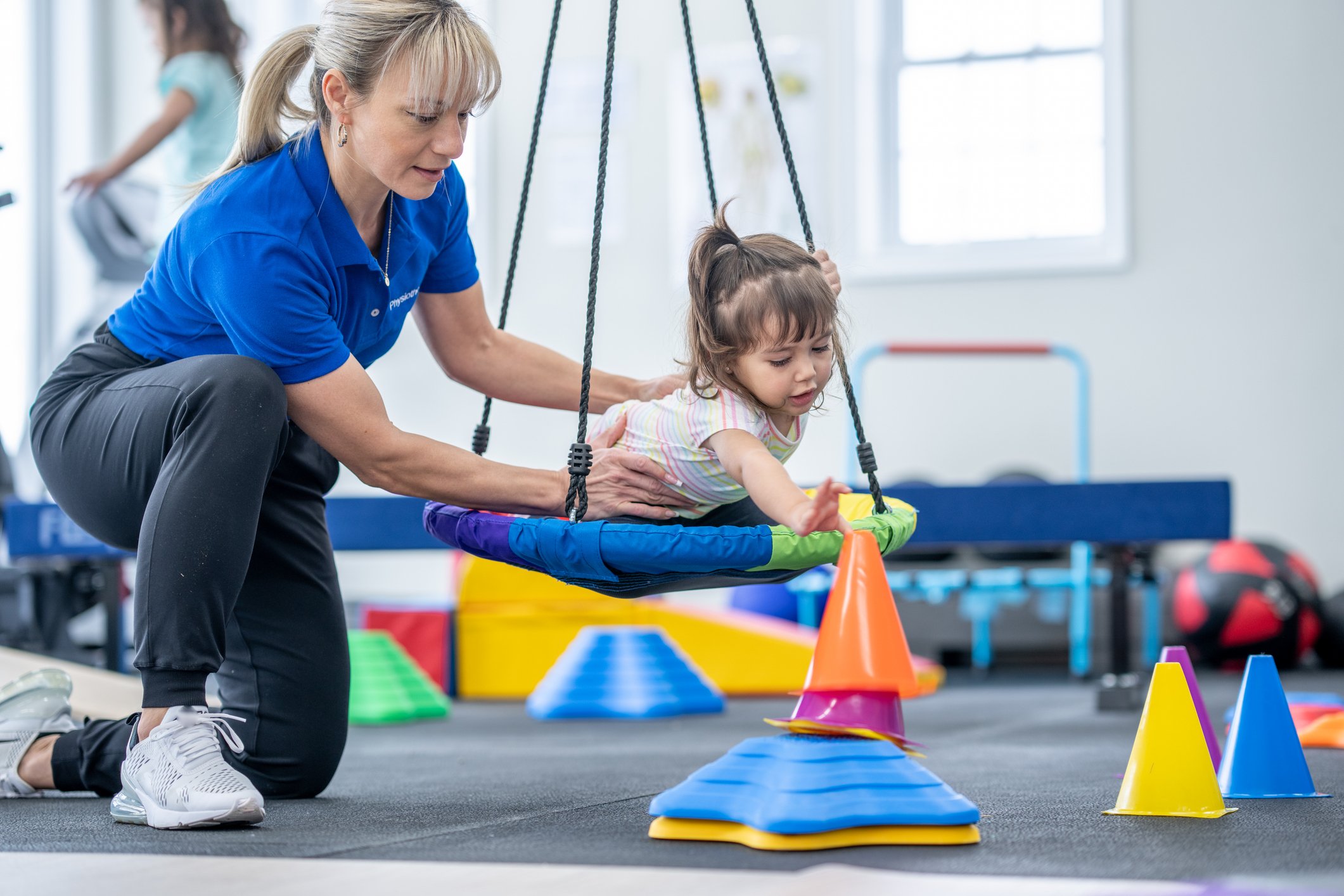
From birth through adolescence, your child gets increasingly more comfortable with using large muscle movements called gross motor skills. But at certain points in your child’s exciting growing process, you may notice they follow their own relaxed pace in learning to crawl, walk, run, climb, or play—and you wonder why.
No need to sweat! Children develop gross motor skills at their own speed, so your observations may not be a cause for concern. However, it is still important to talk with a pediatric specialist about your child’s progress and learn about options that empower growth.
What Are Gross Motor Skills?
Gross motor skills are the expansive muscle movements we make during our day-to-day activities, such as standing up straight, walking through our home, bending at our waist to pick up toys, or waving our hand above our head to greet a friend.
As your child builds these skills, you can easily monitor their progress by referring to a childhood development timeline created by healthcare providers.
This timeline is marked with age-driven stages of growth, displaying skill and behavioral achievements that range from simple to complex as your child becomes more independent. With this timeline, you can track your child’s gross motor achievements, known as gross motor milestones, to ensure your child is strengthening physical abilities essential for thriving in life.
Common Signs of Gross Motor Skill Delays
Always remember children grow at their own pace and may reach gross motor milestones earlier or later than what is seen online or in diagrams at healthcare clinics for childhood development. For example, if your child happens to reach milestones after the age categories listed below, this may not be a cause for concern. But to stay proactive in your child’s development, these are some common signs of delays you can watch for:
- Newborn (0 to 2 months): has limited head, arm, or leg movement.
- Infant (3 to 12 months): struggles to roll over, crawl, or pull up on furniture.
- Toddler (12 months to 3 years): faces challenges with standing, walking, or climbing stairs.
- Preschooler (3 to 5 years): experiences difficulties with pedaling a tricycle, kicking a ball, or jumping.
- School-age (6-17 years): encounters challenges with skipping, riding a bicycle, or playing sports.
When Should I Connect with a Pediatric Specialist?
Children reach gross motor milestones at their own rate, but some may benefit from professional support. This is why healthcare providers designed the childhood development timeline—so we can track how children are progressing toward independence and know when to help them strengthen skills.
If you find yourself collecting questions about your child’s progress with gross motor skills, talk with your pediatrician or a pediatric therapist about your concerns. They can provide professional interpretations and guidance that foster growth.
Reach Out to First Steps for Expert Support
If your child is showing signs of gross motor skill delays, our skilled team of therapists here at First Steps Pediatric Therapy can answer your questions and help empower your child’s development. To receive more information or schedule your free 15-minute screening, reach out to us at (700) 900-7432. We are here to support you and your child.