
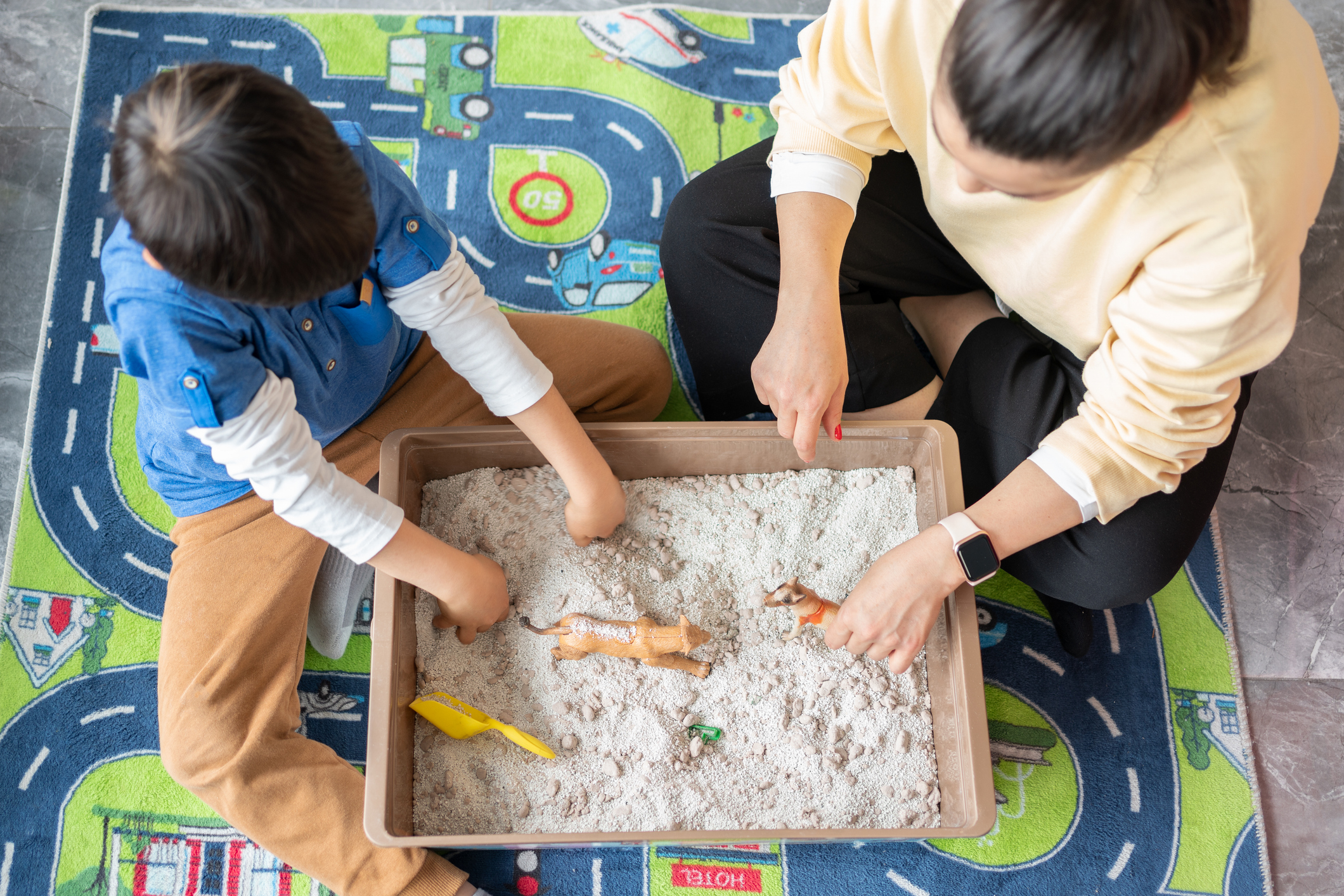
Does your child avoid bright lights, loud environments, or certain food textures? Or do they seek sensations in their surroundings, such as feeling adrenaline rushes when jumping on a trampoline, exploring textures when touching everything around them, or enjoying the tightness and warmth of bear hugs? If some of these sound familiar to you, your child may be showing signs of a sensory processing disorder.
What Is a Sensory Processing Disorder?
A sensory processing disorder (SPD) affects how the brain receives, processes, and responds to sensory information from the traditional five senses—sight, sound, smell, taste, and touch—and also the two lesser-known ones: balance and body awareness. When SPD is present, it often shows up as either a hypersensitivity or hyposensitivity to sensory experiences.
Hypersensitivity in Children
If a child is hypersensitive, they tend to avoid sensory input from their environment because they have heightened reactions to it. Some experiences that may cause discomfort include bright lights, loud sounds, busy playgrounds, irritating clothes, or unfamiliar food textures.
Hyposensitivity in Children
When a child is hyposensitive, they often seek out sensory experiences because they have a lower response to everyday sensations. A child may pursue and enjoy things like spinning, jumping on and off furniture, touching everything around them, or craving deep pressure from tight hugs or weighted blankets.
Beyond the Traditional Five Senses
Whether your child experiences hypersensitivity or hyposensitivity, they may also encounter difficulties related to balance and body awareness—two lesser-known senses involved in sensory processing. When this occurs, it may lead to challenges with the following:
- Movement (bumping into things)
- Coordination (experiencing clumsiness)
- Social interactions (not engaging with others because the environment or activities feel difficult to navigate)
- Emotional regulation (avoiding uncomfortable situations that involve movement or spatial awareness).
Signs of a Sensory Processing Disorder in Children
Since a sensory processing disorder often appears as either a hypersensitivity or hyposensitivity to sensations, one may describe your child’s behavior and habits more than the other. Here are some signs of both types of SPD.
Hypersensitive Behaviors
If your child shows characteristics of hypersensitivity, this means they avoid sensory input from their environment because they experience a heightened response to it. These are a few common signs of hypersensitivity:
- Have low pain tolerance
- Fear playgrounds
- Dislike bright lights or loud sounds
- Refuse to wear clothes that feel irritating
- Express strong emotions when feeling overwhelmed by surroundings, activities, or other factors
Hyposensitive Behaviors
If your child shows characteristics of hyposensitivity, this means they seek sensory experiences in their surroundings because they have a lower response to sensations. These are some common indications of hyposensitivity:
- Have a high tolerance for pain
- Want to move around as much as possible
- Crave adrenaline rushes
- Need to touch people and objects
Is Occupational Therapy Effective at Treating a Sensory Processing Disorder?
Occupational therapy is an effective option for improving challenges related to a sensory processing disorder. By using assessments of your child’s abilities and evidence-based methods, an occupational therapist can develop a personalized treatment plan that helps your child navigate sensory experiences and empowers them in their daily lives.
What Is Pediatric Occupational Therapy?
Occupational therapy helps children develop everyday skills for navigating and participating in daily activities. Clinical sessions involve learning and practicing fine motor skills, sensory processing techniques, self-care strategies, and more to help children strengthen their confidence and independence.
Approach for Treating a Sensory Processing Disorder
To help a child achieve therapy goals for successfully self-managing a sensory processing disorder, an occupational therapist creates and follows a personalized treatment plan. This plan is crafted based on in-clinic assessments of the child’s abilities and needs, notes from the child’s pediatrician, and best therapeutic practices. The process for developing skills through occupational therapy is an evidence-based, child-led experience.
Goal of Pediatric Occupational Therapy
Occupational therapy empowers children with essential skills that enable them to thrive in life. This goal is achieved through the professional guidance and support of an occupational therapist, a specialist who can ensure a child reaches therapy goals. Through this expert treatment, a child strengthens their independence, enabling them to handle daily tasks, navigate various settings and situations, and accomplish goals with confidence.
When Should I Contact a Pediatric Therapist?
If you believe your child displays signs of a sensory processing disorder, contact an occupational therapist with your concerns. They can provide the best interpretations of your observations and, if needed, help your child overcome challenges and thrive in life.
Reach Out to First Steps for a Free Consultation
Ready to create a supportive team for your child and help them overcome their struggles with a sensory processing disorder? We are here to join your child’s journey. Here at First Steps Pediatric Therapy, we will develop a personalized plan for your child that includes clinical sessions and homework tailored to reach therapy goals.
Chat with us today at (700) 900-7432 to receive more information or set up your free 15-minute screening. We look forward to working with you to create an empowering plan for your child’s growth.